Which vector equation represents the line perpendicular to the line shown?
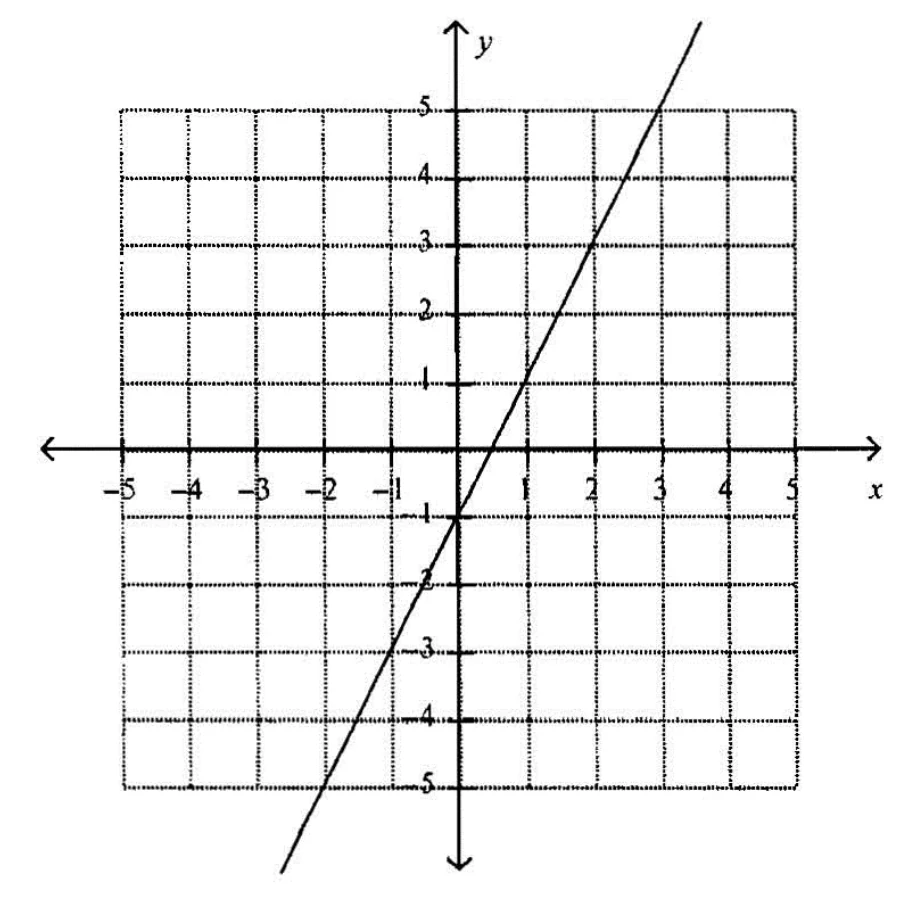
Show answer
b)
Grade 12 · MCV4U · Calculus & Vectors
Lines and Planes is the last MCV4U unit, and on Martian Lab it includes intersections, which some courses teach as a unit of their own. The free test is 8 multiple-choice questions on direction and normal vectors, switching between vector, parametric and symmetric equations, the plane through a line and a point, and how two planes meet. Pick your answer before you open it.
8 questions, exactly as a free account gets them in the first Lines and Planes test on Martian Lab. Try each one on paper first, then open the answer.
The lessons go from equations of lines in 2D and 3D to equations of planes, then intersections of lines, of lines and planes, and of two and three planes.
Then 4 full Lines and Planes practice tests to check yourself.
Start Lines and Planes freeVector, parametric and symmetric equations of lines in 2D and 3D, vector and scalar equations of planes, normal vectors, and the intersections of lines and planes. The free questions on this page are on the equations and on how two planes relate; solving for intersection points is in the lessons.
In this unit. Martian Lab teaches intersections of lines, of a line and a plane, of two planes and of three planes as the last four lessons of Lines and Planes, so there is no separate intersections unit.
Move every term to one side so the plane reads Ax + By + Cz + D = 0. The normal is [A, B, C]. For 3x - 2z = 4y + 1 that gives 3x - 4y - 2z - 1 = 0, so n = [3, -4, -2].
Set each fraction equal to t and solve for x, y and z. (x + 3)/3 = (y + 2)/2 = (z - 1)/2 becomes x = 3t - 3, y = 2t - 2, z = 2t + 1.
Compare their normals. Parallel planes have normals that are scalar multiples of each other, and perpendicular planes have normals with a dot product of 0. If neither holds, the planes meet at some other angle along a line.
One idea at a time: a short explanation, then five worked examples.