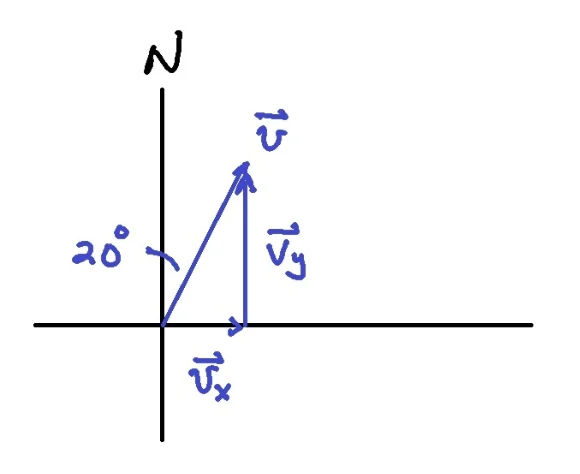
Consider the given diagram then describe the direction of using
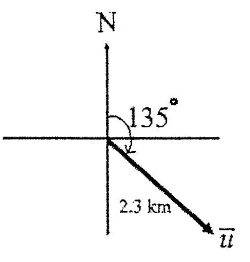
- true bearing
Show answer
- quadrant bearing
Show answer
Grade 12 · MCV4U · Calculus & Vectors
Introduction to Vectors starts the second half of MCV4U with vectors drawn as arrows. Expect bearings, scalar multiples, equivalent and opposite vectors, writing one vector in terms of others in a parallelogram, and the cosine law for angles and magnitudes, then force and velocity problems. On Martian Lab the unit is Geometric Vectors; try each question below before you open the answer.
8 questions (15 parts), exactly as a free account gets them in the first Geometric Vectors test on Martian Lab. Try each one on paper first, then open the answer.
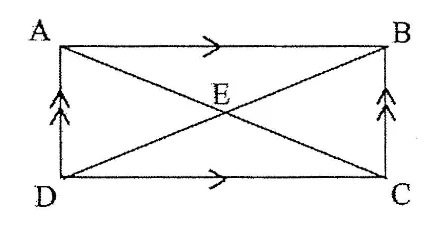
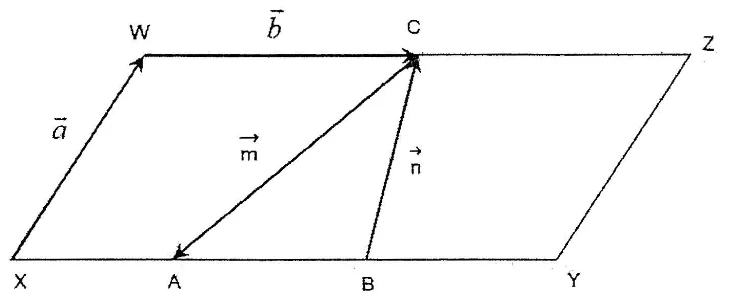
The lessons start with geometric vectors, then apply them to force and to velocity.
Then 4 full Geometric Vectors practice tests to check yourself.
Start Geometric Vectors freeDescribing direction with bearings, scalar multiples, equivalent, opposite and collinear vectors, adding and subtracting vectors in a diagram, horizontal and vertical components, the angle between two vectors, and force and velocity problems. The questions on this page cover each of these.
A true bearing is measured clockwise from north as three digits, like 135°. A quadrant bearing starts at north or south and turns toward east or west, so the same direction is [S 45° E].
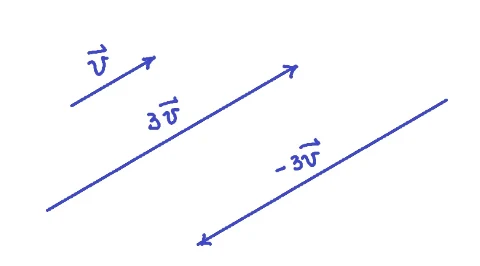
Equivalent vectors have the same magnitude and direction, wherever they sit. Opposite vectors have the same magnitude and opposite directions. Collinear vectors are parallel, with any magnitudes: v, 3v and -3v are all collinear.
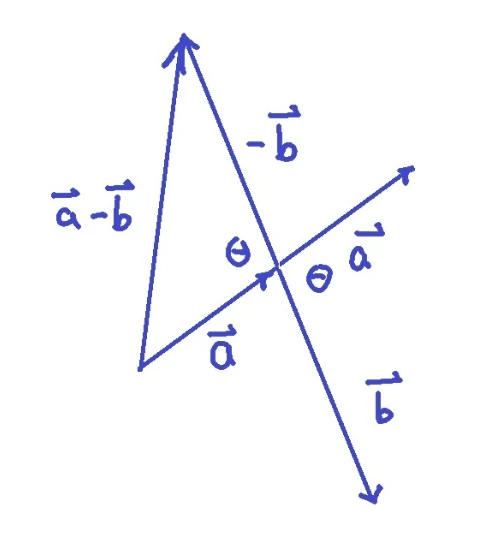
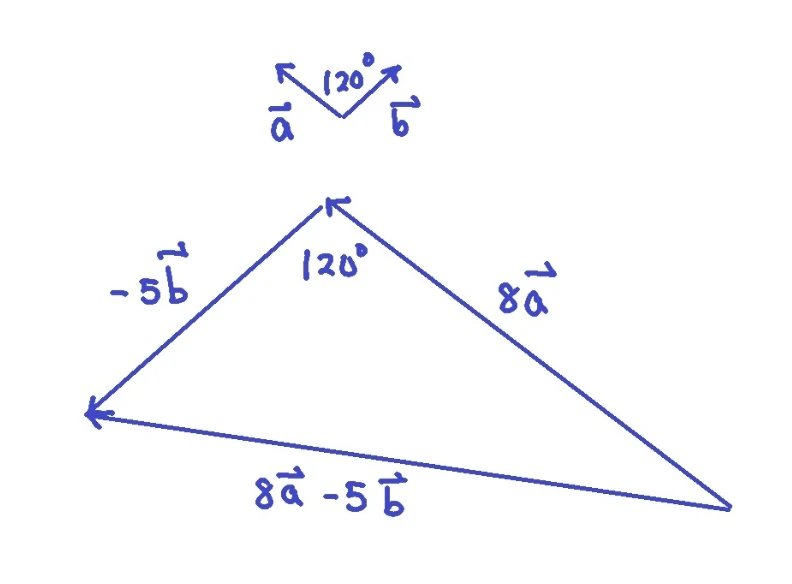
Use the cosine law on the triangle formed by a, b and a - b: |a - b|² = |a|² + |b|² - 2|a||b| cos θ. With |a| = 8, |b| = 12 and |a - b| = 10, cos θ = 108/192, so θ ≈ 56°.
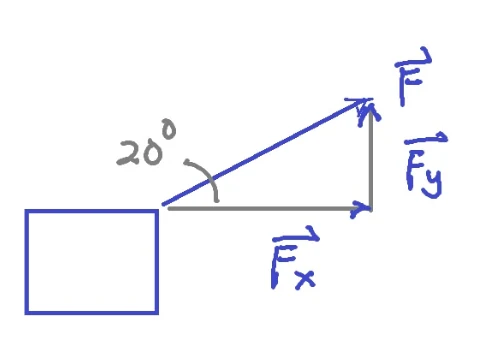
Multiply the magnitude by the cosine of the angle the force makes with the horizontal. A 55 N pull at 20° to the ground has a horizontal component of 55 cos 20° ≈ 51.7 N.